
The Underwater Cave, Puerto Galera: A Swim, Not a Dive
A half-submerged sea cave in a sheltered cove off San Antonio — reached only by boat, and one stop on the island-hopping circuit rather than a day out.

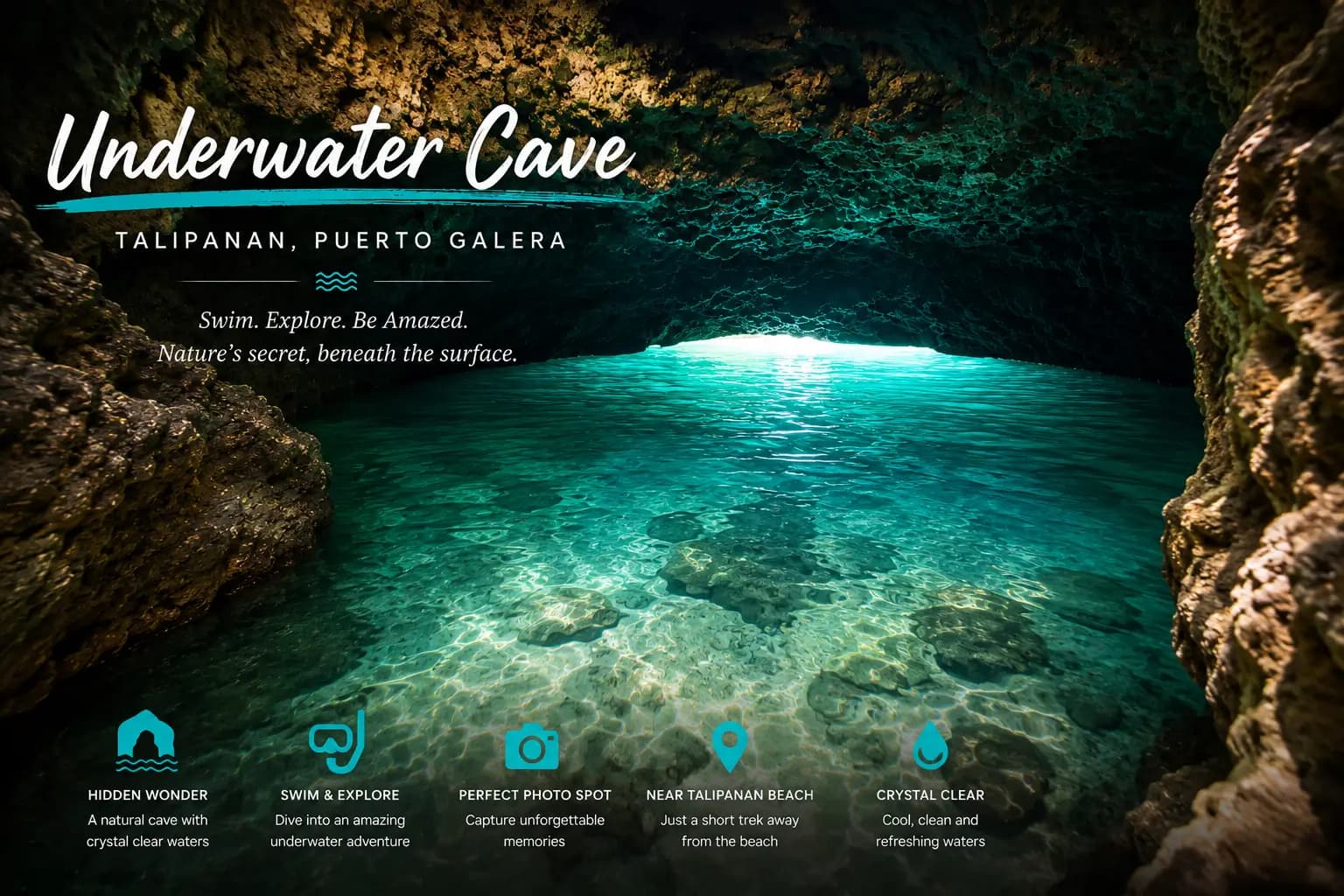
The name oversells it, and that is worth saying first. The Underwater Cave off San Antonio is not a cave dive and you do not need a tank. It is a rock formation on the shoreline whose entrance sits in a small cove, half submerged in seawater — you swim in, look up, and swim out.
The provincial tourism office lists it under San Antonio and calls it “one of the usual stops of the island hopping activity in Puerto Galera”. That is exactly the right expectation: it is a stop on a circuit, not a destination you build a day around.
What it is like
You come in on a boat, get in the water off the side, and swim the short distance to the opening. Inside, the light comes in off the surface and bounces around the rock, which is the reason everyone takes a photograph looking back out toward the entrance. Boat crews will tell you it is shallow enough to stand in parts, though how shallow depends on the tide on the day — take the water as you find it rather than as somebody described it.
Nobody remembers the cave. Everybody remembers the light coming through the entrance.
Because the cove is enclosed, the water inside is calmer than the open bay around it. That is what makes the stop work for people who are not strong swimmers — but it is still the sea, and it still moves. The surge inside a half-submerged chamber is gentler than outside it but it does not stop; you feel yourself lifted and set down again on a slow count, and the rock does not move when you do.
Why the light does that
The effect people photograph is not coming from inside. Sunlight enters through the submerged part of the opening, refracts through moving water and lands on pale rock above the waterline, so the whole chamber picks up a colour that shifts as the swell breathes in and out of the entrance.
Which means the time of day decides what you get. Around the middle of the day the sun is steep enough to push light deep through the opening; early and late it skims and the inside goes flat. If the photograph is the reason you are going, that is the only variable you control — and you control it by asking the operator when the boat runs, not by anything you do in the water.
How you get there
Only by boat, and in practice only as part of an island-hopping trip. The standard circuit out of Sabang or Muelle strings it together with Coral Garden, the beaches on the islands and the sandbar. Nobody sells the cave on its own, and there would be no reason to buy it if they did.
- Ask what the circuit includes before you pay. The stops vary between operators and the cave is not always on the list.
- Bring water shoes if you have them. There is rock, and rock in the sea has barnacles on it.
- Wear the life vest if the crew hands you one, even if you swim well. The enclosed water lulls people.
- Leave the good camera on the boat. You are entering a rock chamber in moving water with nowhere dry to stand.
Getting in and out without hurting yourself
Almost everything that goes wrong here is contact with rock rather than trouble with water. The walls are colonised — barnacles, urchins, sharp encrusting growth — and none of it is dangerous unless you are pushed into it, which the surge will do if you are close and not paying attention.
- Enter on the lull, not on the push. Watch the entrance for two or three cycles before you swim it. There is always a pause.
- Keep an arm's length off the wall rather than a hand on it. Fending off a wall with your palm is how people cut their hands.
- Go one at a time. The opening is narrow enough that a queue inside it is its own problem.
How long it takes
Fifteen or twenty minutes in the water. It is a stop between the longer ones, and the boats treat it that way. The people who enjoy it are the ones who were not expecting a cave system.
That framing is worth holding on to, because the cave is the stop most likely to disappoint someone who read the name and built an afternoon around it. Taken as ninety seconds of very good light in the middle of a day on a boat, it is one of the better things on the circuit.
Inside the reserve
San Antonio and the water around it sit inside Puerto Galera's UNESCO Man and the Biosphere Reserve, designated in 1977. The same protection covers the reefs the rest of the circuit is built around. See A UNESCO Biosphere Reserve.
Nothing grows back quickly on a wall that a boatload of people steadies themselves against every hour. Float rather than hold, and take nothing off the rock.
Where it fits
Take it as one stop of several. The snorkelling on the same circuit is at Coral Garden, the walkable strip of sand is the sandbar to Paniquian, and the bay it all happens in is Muelle Bay. The rest is in Famous places & landmarks.
References & sources
- Provincial Government of Oriental Mindoro — Under Water Cave, Travel Oriental Mindoro (location in San Antonio and the description quoted above).
- UNESCO — Puerto Galera, Man and the Biosphere Programme (MAB), designated 1977.
A note on the name: “Underwater Cave” suggests something technical. It is a half-submerged sea cave you snorkel into, and no certification is involved. If you are looking for actual cave diving, this is not it.
Founders of GaleraHub focused on trust-first local marketplace operations in Puerto Galera.
Have a story to share about Puerto Galera?
Tips, guides, seller spotlights — tell us what the community should know.
Pitch a story